Water management is important for construction sites, ponds, reservoirs, drainage areas, and many industrial applications. Standing water can slow operations and create problems when it is not removed efficiently. A floating submersible pump offers a practical solution for applications where water levels can change frequently. Its floating design allows the pump to remain near the water surface while the pumping system removes water through the connected discharge line. Malhar Pump provides pumping solutions for different water management requirements and applications.
What Is a Floating Submersible Pump?
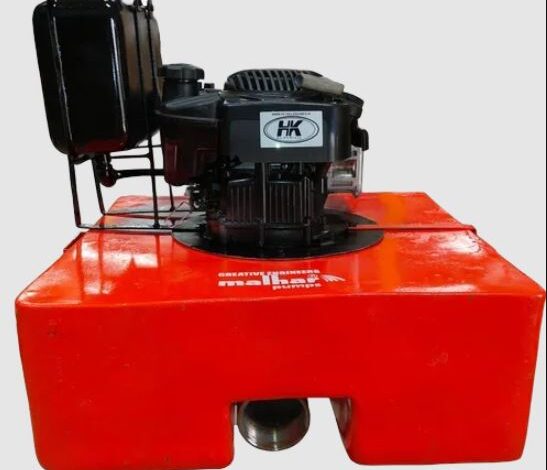
A floating submersible pump is designed to operate while supported by a floating structure on the water surface. Unlike conventional pumps that remain fixed at a particular location, the floating arrangement allows the pump to move with changing water levels. The pump remains submerged while the floating platform helps maintain its position. This design can be useful for ponds, reservoirs, sumps, excavation areas, and other locations where water depth may change. The exact pump selection depends on factors such as flow requirements, water quality, pumping depth, and discharge conditions.
How Does a Floating Submersible Pump Work?
The basic working principle involves placing the submersible pump on a floating platform or float assembly. As the water level changes, the floating system helps keep the pump positioned appropriately. The pump draws water through its inlet and transfers it through a connected discharge pipe or hose. Since the pump operates underwater, it can help reduce the need for complicated suction arrangements. However, installation requirements can vary depending on the application. Proper sizing, electrical protection, discharge planning, and regular inspection are important for reliable pump operation.
Benefits of a Floating Submersible Pump
A floating submersible pump can offer several practical benefits for water management. Its floating design provides flexibility when water levels change. It can also be useful in locations where installing a permanent pump foundation is difficult. The compact arrangement can make installation and repositioning easier for certain applications. Furthermore, the pump can be used in different water bodies and temporary dewatering situations when the equipment is correctly selected. Reduced suction pipe requirements can also simplify some pumping setups. The actual benefits depend on the pump model, operating conditions, and installation method.
Applications of Floating Submersible Pumps
Floating submersible pumps can be used in several water management applications. They may be suitable for ponds, reservoirs, construction sites, drainage areas, excavation projects, wastewater applications, and water storage facilities. They can also support dewatering where water levels change during operations. In agricultural and industrial settings, these pumps may help move water from one location to another when the installation conditions allow. Before selecting a pump, users should consider the type of water, required flow rate, discharge distance, and operating environment. Correct selection can help improve pumping performance and equipment life.
Choosing the Right Pump
Selecting the right pump requires careful consideration of the application’s requirements. Flow rate is one of the most important factors because it determines how much water the pump needs to move within a specific period. Head requirements should also be considered because the pump must overcome elevation and system resistance. Water quality is another important factor. Clean water and water containing solids may require different pump configurations. Users should also consider motor power, discharge size, operating hours, and available electrical supply. A professional pump supplier can help identify a suitable model based on these requirements.
Floating Design for Changing Water Levels
Changing water levels can make conventional pumping arrangements difficult in certain locations. A floating system allows the pump to remain positioned on the water surface as the level rises or falls. This can be particularly useful in reservoirs, ponds, and temporary water collection areas. The floating arrangement can help maintain the pump’s position without requiring a fixed installation at a specific water level. However, the float system should be properly secured and installed according to operating conditions. Regular inspection can also help identify wear, damage, or other issues before they affect pumping performance.
Maintenance and Safe Operation
Regular maintenance is important for keeping a floating submersible pump operating efficiently. Users should inspect the pump, float assembly, electrical connections, discharge hose, and other components according to the manufacturer’s recommendations. The pump should also be checked for blockages or material buildup that could affect water flow. Electrical safety is especially important because the equipment operates in or near water. Operators should follow appropriate safety procedures and manufacturer instructions during installation, inspection, and maintenance. Timely servicing can help reduce unexpected downtime and support consistent pump performance.
Why Choose a Reliable Pump Manufacturer?
A reliable manufacturer can help users select equipment according to their specific water management requirements. Pump quality, technical support, product availability, and application knowledge can all influence the overall pumping experience. Malhar Pump provides pumping solutions for different industrial and water management applications. Customers should discuss factors such as flow rate, head, water type, operating conditions, and installation requirements before selecting equipment. Proper technical guidance can help ensure that the selected pump matches the actual application instead of relying only on general specifications.
Frequently Asked Questions
What is a floating submersible pump?
A floating submersible pump is a pump mounted on a floating structure that allows it to operate while remaining positioned on the water surface. It can be used for water removal and transfer in ponds, reservoirs, construction areas, and other applications.
Where can a floating submersible pump be used?
It can be used in ponds, reservoirs, excavation areas, construction sites, drainage systems, water storage facilities, and other locations where changing water levels require flexible pumping.
What factors should I consider when selecting a floating pump?
Consider flow rate, head, water quality, solids content, discharge distance, motor power, operating hours, and installation conditions. These factors help determine which pump configuration is suitable for the application.
Does a floating submersible pump require regular maintenance?
Yes. Regular inspection and maintenance can help keep the pump operating properly. Users should check the pump, float assembly, discharge system, and electrical components according to the manufacturer’s recommendations.
Why choose a professional pump manufacturer?
A professional manufacturer can help customers select a pump based on actual application requirements. Proper guidance can improve equipment selection and help users avoid choosing a pump that does not match their required flow, head, or operating conditions.
Conclusion
Effective water management requires pumping equipment that matches the conditions of each application. A floating submersible pump can provide a flexible solution for water removal and transfer where water levels change frequently. Its floating design can make it suitable for ponds, reservoirs, construction sites, drainage areas, and other applications. Malhar Pump offers pumping solutions for different water management needs and can help customers understand suitable equipment options. If you are planning a water pumping project, consider your flow, head, water quality, and installation conditions before selecting the right pump.