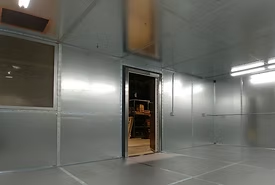
In today’s fast-paced technological world, electronic devices and wireless communication systems are more prevalent than ever. While these innovations bring convenience, they also introduce potential risks from electromagnetic interference (EMI) and radio frequency (RF) exposure. This is where RF Shielding Companies play a vital role in maintaining safe and interference-free environments. National Shielding is among the leading names in this sector, providing customized solutions that meet both industry standards and client-specific requirements.
RF Shielding Companies: The Importance of Electromagnetic Safety
Electromagnetic interference can disrupt the functionality of sensitive equipment in industries ranging from healthcare to aerospace. RF shielding companies specialize in designing and implementing protective solutions that prevent signal leakage and exposure. National Shielding leverages advanced materials and engineering techniques to deliver effective RF containment, ensuring operational reliability and safety. By collaborating with experts, businesses can mitigate risks, maintain compliance, and avoid costly equipment malfunctions caused by stray electromagnetic signals.
RF Shielding Companies: Comprehensive Solutions for Every Industry
Different industries face unique challenges when it comes to RF exposure. Healthcare facilities, for example, require shielding in MRI rooms and diagnostic areas, while manufacturing plants need protection for automation and robotics systems. RF shielding companies provide tailored solutions such as copper and aluminum enclosures, conductive coatings, and RF doors and windows. National Shielding stands out for its expertise in integrating these solutions seamlessly into existing infrastructures, without compromising aesthetics or functionality.
RF Shielding Companies: Innovative Materials and Technologies
One of the critical aspects of RF protection is the choice of materials. Modern RF shielding companies use high-conductivity metals, specialized fabrics, and composites to ensure maximum attenuation of unwanted signals. National Shielding constantly invests in research and development to introduce innovative materials that not only block electromagnetic waves but are also durable, lightweight, and cost-effective. These advancements allow organizations to implement shielding solutions quickly, efficiently, and with long-term reliability.
RF Shielding Companies: Compliance and Industry Standards
Compliance with regulatory standards is a major factor when selecting RF shielding companies. Organizations must adhere to guidelines set by international bodies such as the FCC, IEC, and ISO. National Shielding ensures all solutions are designed and tested to meet these strict standards, offering clients peace of mind. This commitment to compliance guarantees that sensitive equipment and personnel are adequately protected, while also minimizing legal or operational risks associated with RF exposure.
RF Shielding Companies: Installation and Maintenance Services
Effective RF shielding requires not only high-quality materials but also precise installation. Leading RF shielding companies provide end-to-end services, including site assessment, design, installation, and ongoing maintenance. National Shielding’s team of certified technicians ensures that every project is executed flawlessly, reducing downtime and ensuring long-term performance. Routine inspections and maintenance services help maintain the effectiveness of shielding solutions, protecting investments and sustaining safe operational environments.
RF Shielding Companies: Benefits of Partnering with Experts
Partnering with professional RF shielding companies offers several advantages. First, it guarantees that organizations receive solutions tailored to their specific needs, whether it is a high-tech lab, medical facility, or commercial workspace. Second, experts like National Shielding provide valuable guidance on material selection, cost optimization, and regulatory compliance. Finally, their experience ensures that projects are completed efficiently, minimizing disruption and maximizing protection against electromagnetic interference.
RF Shielding Companies: Choosing the Right Partner
Selecting the right RF shielding companies is crucial for long-term success. Businesses should look for providers with proven expertise, comprehensive solutions, and a strong track record of delivering results. National Shielding exemplifies these qualities through its innovative approach, industry knowledge, and commitment to client satisfaction. By choosing a reliable partner, organizations can safeguard sensitive equipment, improve operational efficiency, and create environments free from electromagnetic interference.
Conclusion: RF Shielding Companies for a Safer Future
In an era dominated by technology and wireless communication, safeguarding against electromagnetic interference is essential. RF shielding companies like National Shielding provide advanced, compliant, and reliable solutions tailored to diverse industries. From innovative materials to expert installation and maintenance, these companies play a critical role in ensuring equipment safety, operational efficiency, and regulatory compliance. Investing in professional RF shielding services is not just a precaution—it is a strategic move to protect technology and human health in today’s interconnected world.